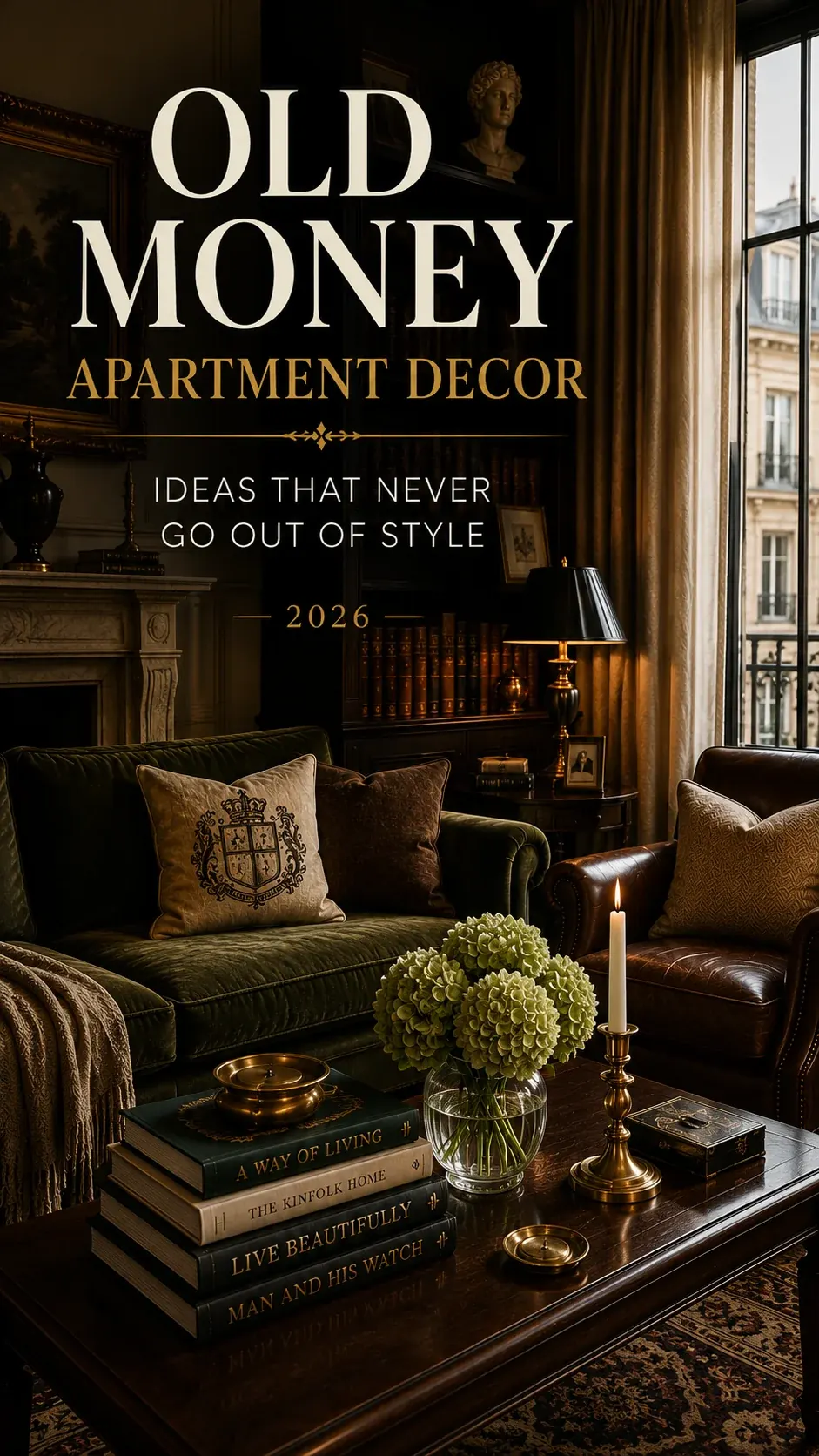
There is a distinct feeling you get when you walk into a home that has belonged to the same family for generations. It doesn't scream at you. It doesn't aggressively demand your attention with massive logos, high-gloss finishes, or the latest micro-trend from social media. Instead, it wraps around you. It feels solid, worn-in, and profoundly comfortable.

This is the essence of old money interiors—an aesthetic that has recently been rebranded in the digital sphere as "quiet luxury."

In a world obsessed with fast furniture and disposable decor, the old money aesthetic is a radical return to permanence. It is the architectural equivalent of a well-tailored tweed jacket or a vintage leather watch strap. It gets better, not worse, with age. But the greatest secret of this aesthetic is that you do not need a trust fund or a historic country estate to achieve it.

Old money interior design is not about wealth; it is about values. It is an approach to decorating that prioritizes patina over perfection, history over novelty, and deep, atmospheric comfort over sterile minimalism.

Whether you are designing a sprawling family home or a rented apartment, this comprehensive guide will teach you the exact psychological and physical principles needed to cultivate the quiet luxury aesthetic.

I

What Are Old Money Interiors? The Philosophy of Inherited Wealth

To understand how to execute this style, you must first understand the psychology behind it. The "new money" aesthetic is often characterized by a need to prove wealth. This manifests in homes that look like luxury hotel lobbies—pristine, highly reflective, rigidly matched, and completely devoid of personal history.

The old money aesthetic, conversely, operates on the assumption that nothing needs to be proven. The aesthetic markers of inherited wealth are:

When you adopt these mindsets, your home naturally begins to shift from feeling "decorated" to feeling curated.

II

The Core Principles of Quiet Luxury Home Decor

If you want your home to radiate timeless elegance, you must adhere to four foundational design principles.

1. Patina Over Perfection

Patina is the physical manifestation of time. It is the soft darkening of cherry wood, the slight oxidization on unlacquered brass, the softening of a heavy linen drape, and the worn pathway on a vintage wool rug. In old money interiors, things that look brand new are often viewed with suspicion. To achieve this look, actively seek out materials that age gracefully. Avoid plastics, laminates, and high-gloss polyurethanes that will inevitably peel or scratch.

2. The Rejection of Trends

Quiet luxury ignores the "Color of the Year." It ignores whatever hyper-specific shape of sofa is currently trending. It relies on classical proportions and historical silhouettes—Chesterfield sofas, roll-arm chairs, wingbacks, and solid wood case goods. Because these shapes have been stylish for two hundred years, they will be stylish for the next two hundred.

3. Layered History (The Mix)

A room where everything matches perfectly is a dead room. The old money aesthetic thrives on tension. It is a 19th-century oil painting hung above a clean-lined mid-century credenza. It is a modern, deep-seated linen sofa paired with a dark, antique walnut coffee table. This mixing of eras creates an environment that feels organic rather than manufactured.

4. Atmospheric Lighting

As we know from interior psychology, overhead lighting is the enemy of intimacy. Quiet luxury relies on a complex, low-level lighting scheme. Think picture lights highlighting artwork, brass reading lamps, shaded table lamps casting warm 2700K glows, and actual candlelight. The room should feature pools of warm light and soft, deliberate shadows.

"Old money interior design is not about wealth; it is about values. It is a radical return to permanence in a world obsessed with disposable decor."

III

The Essential Materials of the Old Money Aesthetic

The old money look cannot be faked with cheap materials. You don't necessarily need to spend a fortune (thrifting is your best friend here), but you do need to know which materials to hunt for.

Dark, Solid Woods
Light, blonde woods like ash and pale oak dominated the minimalist trends of the last decade. Old money interiors lean heavily into dark, rich woods. Look for mahogany, walnut, dark oak, and cherry. You want to see the grain. You want to feel the weight of solid joinery.

Unlacquered Metals
Avoid anything shiny, chrome, or sprayed gold. The quiet luxury aesthetic demands "living finishes." Unlacquered brass, aged bronze, and pewter will naturally tarnish and develop character over time from the oils in your hands.

Heavy, Natural Textiles
Ditch the polyester blends. Your upholstery, curtains, and bedding should be made of heavy linen, rich cotton velvet, wool, tweed, or pure silk. These fabrics drape differently, absorb sound better, and interact with light in a way that synthetic fabrics simply cannot replicate.

Honed, Matte Stone
If you are incorporating marble or stone (for countertops, coffee tables, or fireplaces), avoid high-gloss polishing. Honed (matte) marble, soapstone, and slate feel much older and more sophisticated. They will etch and stain over time—and in this aesthetic, that is considered a feature, not a bug.

IV

Room-by-Room Guide to the Old Money Aesthetic

The Quiet Luxury Living Room

The living room should feel like a sanctuary for reading and conversation, not just a holding pen for the television. Float your furniture away from the walls to create an intimate conversation area. Anchor the space with a large, faded vintage rug (Oushak, Persian, or Turkish). Frame a mix of landscapes, portraits, and abstract pieces in varied frames, opting for an organic gallery wall rather than a rigid grid. Use floor-length, heavy pinch-pleat drapes mounted high above the window frame to add architectural height.

The Old Money Bedroom

This space should prioritize deep, restorative rest through sensory reduction and tactile luxury. Use crisp percale or heavy linen sheets and a down duvet. Avoid overly complicated decorative pillow arrangements; keep it simple and slightly undone. Mix a dark wood bed frame with mismatched nightstands and perhaps a vintage writing desk in the corner. For lighting, rely on wall-mounted brass sconces or substantial bedside lamps with pleated fabric shades.

The Moody, Intellectual Library or Study

Even if it’s just a corner of your apartment, every old money home needs a space dedicated to intellect. Floor-to-ceiling built-ins, painted in a dark, moody hue (think Farrow & Ball’s Hague Blue or Green Smoke), create immediate atmosphere. Fill them with actual books, arranging them vertically and horizontally for visual rhythm. A worn leather wingback chair or a velvet tufted armchair positioned next to a good reading light completes the space.

V

7 Decor Mistakes That Scream "New Money"

If your goal is quiet luxury, these are the visual traps that instantly undermine your efforts:

  1. 01 — The Matching Set

    Buying the entire showroom vignette.
    Buying the sofa, loveseat, and chair from the same collection looks like a catalog, not a home. Inherited style relies on mismatched harmony.
  2. 02 — Visible Technology

    Exposed wires and dominating screens.
    Massive TVs dominating the room, exposed wires, and plastic cable boxes puncture the atmosphere. Frame TVs or concealing screens behind art is the preferred route.
  3. 03 — Sterile White Lighting

    Using daylight bulbs (4000K-6000K).
    Bright white light destroys the mood and makes everything look cheap. Stick strictly to warm 2700K or lower.
  4. 04 — Floating Rugs

    Rugs that don't anchor the furniture.
    A rug so small that the furniture’s front legs don't sit on it makes the room look cheap and disproportionate. Always size up.
  5. 05 — Logomania

    Designer pillows or blankets with massive brand logos.
    Wealth whispers; it does not shout. Overt branding is the antithesis of quiet luxury.
  6. 06 — "Fast" Art

    Generic, mass-produced canvas prints with words.
    Skip the typography wall art. Opt for inexpensive vintage oil paintings, sketches, or original works from local artists instead.
  7. 07 — Over-Polishing

    Surfaces without soul.
    A room where absolutely everything is perfectly smooth, highly reflective, and brand new lacks humanity. You need texture and age to ground the space.
VI

Comparison: New Money vs. Old Money Aesthetics

Element New Money / Trend-Chasing Old Money / Quiet Luxury
Furniture Sourcing Entire rooms bought from one modern catalog Collected over time; mix of antiques and classic modern
Metals Polished chrome, shiny gold plating Unlacquered brass, aged bronze, wrought iron
Wood Finishes High-gloss veneers, pale manufactured woods Solid dark woods, burl wood, visible grain
Art Mass-produced prints, large logo pop-art Oil portraits, vintage landscapes, classical sketches
Textiles Polyester blends, crushed velvet, bright whites Heavy linen, worn leather, wool, aged cotton
Lighting Recessed LED ceilings, bright white (5000K) Shaded table lamps, picture lights, warm amber (2700K)
VII

How to Get the Old Money Aesthetic on a Budget

You do not need an endless budget to achieve this look. In fact, relying on money rather than taste is exactly what creates bad design. Here is how to execute quiet luxury affordably:

The Sourcing Rule

Master the art of the estate sale. Estate sales and antique auctions are goldmines for solid mahogany furniture, vintage rugs, and original oil paintings that cost less than flat-pack furniture. Always look for dovetail joints on drawers as a sign of quality.

VIII

Conclusion: The Reward of the Slow Gatherer

Creating an old money, quiet luxury interior is ultimately an exercise in patience and self-knowledge. It is not a look you can achieve in a single frantic weekend of online shopping. It requires hunting for the right antique coffee table, waiting for the perfect vintage rug to appear at an estate sale, and allowing your unlacquered brass to slowly tarnish over the years.

This aesthetic rewards the slow gatherer. By focusing on longevity, embracing imperfection, and prioritizing deep, atmospheric comfort over flashy trends, you can create a home that feels fundamentally grounded. You are no longer just decorating a space; you are crafting an environment that feels like it has a soul. And that is a luxury no amount of money can instantly buy.